
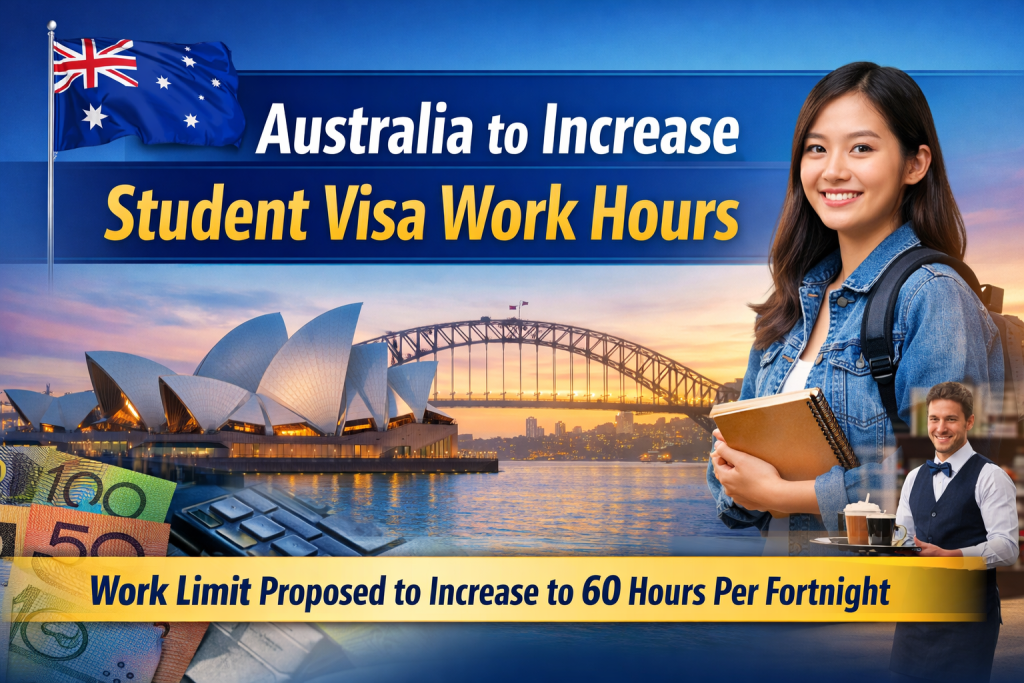
As part of the policy commitments ahead of the 2025 Australian federal election, the Liberal–National Coalition has put forward a proposal to increase the cap on work hours for student visa holders during study periods. This proposal has now been costed by the Parliamentary Budget Office (PBO) and is attracting attention from students, employers and migration policy observers alike.
What’s Being Proposed
Under the current rules, student visa holders (subclass 500) in Australia are allowed to work up to 48 hours per fortnight while their course is in session. The Coalition’s proposal would increase that limit by 12 hours per fortnight, allowing up to 60 hours of paid work during study terms. The change is intended to come into effect on 1 July 2026 if the policy is adopted.
Key features of the proposal:
- Increase in fortnightly work cap from 48 to 60 hours during term time.
- The change would be ongoing once implemented.
Why This Matters
International students balance study, living costs, and work. Allowing more hours would give students greater flexibility and the chance to earn more to cover expenses. Employers, especially in retail, hospitality and aged care sectors, have been calling for more reliable access to workers. At the same time, immigration policy commentators are watching how such changes might affect labour markets and student welfare.
Budget Implications
According to the PBO’s costing document, the measure is expected to improve Australia’s fiscal position over the coming years. This boost reflects additional personal income tax revenue generated by students working more hours. The PBO estimates the underlying cash balance would increase by about $334 million across several years, with the bulk of gains appearing after the policy starts.
However, those fiscal figures depend on several assumptions, including the number of student visas granted and how long students stay in the workforce after completing their studies. These variables could shift with economic conditions and future policy settings.
Context in Broader Immigration Policy
This work hours proposal sits alongside other student visa-related policies being debated in the election. For example:
- Labor has costed an increase in the visa application charge (VAC) for student visas, as part of its own election commitments.
- The Coalition has also proposed a two-tiered visa application charge, which would impose higher fees on students attending Group of Eight universities and a transfer fee for those changing education providers.
- There are broader proposals to cap or reduce international student commencements in some education sectors.
These proposals show how student visa policy is becoming a focal point in discussions about immigration, economic growth and support for international education.
What’s Next
At this stage, the work-hours change is a party policy proposal rather than law. If the Coalition wins government and implements the plan, statutory changes and regulatory updates would need to be passed before it takes effect. Discussions about how best to support students and balance labour market needs are likely to continue through the election period and into the parliamentary session that follows.
More details: https://www.pbo.gov.au/sites/default/files/2025-05/PBO-ECR-2025-2848-Student%20visa%20work%20hours%20%E2%80%93%20increase.pdf